Households in the Canary Islands on Spain’s regulated electricity tariff are facing a sharp increase in their bills this August, with estimates showing costs more than 22% higher than during the same period last year.
The combination of exceptionally high summer demand, increased use of air conditioning and rising natural gas prices is putting renewed pressure on electricity costs across the archipelago
During the first 21 days of August, the estimated bill for an average customer on the regulated PVPC tariff reached €61.33, compared with around €50 during the same period last year.
That represents an increase of more than €11, or over 22%, according to a simulation using data from the National Commission for Markets and Competition (CNMC).
Compared with the same stage of July, bills are already around 8% higher, equivalent to approximately €4.60 for the example household.
Why are electricity prices rising?
One of the main factors is the intense summer heat.
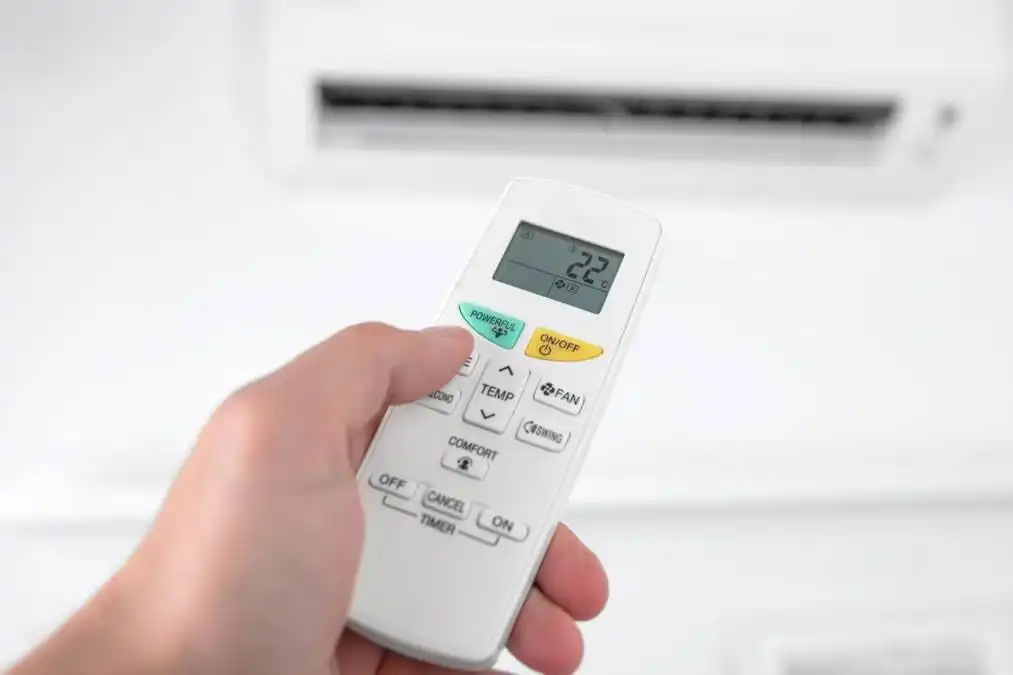
During periods of high temperatures, electricity consumption rises considerably as homes, businesses, hotels, restaurants and offices make greater use of air-conditioning and refrigeration systems.
This additional demand has contributed to significantly higher wholesale electricity prices during August.
Solar power can push prices extremely low, and occasionally even into negative territory, during periods of strong daytime photovoltaic production. However, the situation changes dramatically after sunset.
Once solar generation disappears but electricity demand remains high, the system relies more heavily on other sources, including gas-fired combined-cycle power stations. And gas itself has become considerably more expensive.
Gas prices adding further pressure
Spain's Mibgas natural gas market reportedly exceeded €65 per megawatt hour (MWh) at points during August.
Prices have been affected by several factors, including uncertainty surrounding Middle Eastern supply routes, European gas reserves ahead of the winter and increased summer demand. This matters because combined-cycle power stations use natural gas to generate electricity.
When these more expensive forms of generation are needed to meet demand, they can push up prices across the wholesale electricity market.
Wholesale electricity averaging over €124/MWh
During the first 23 days of August, Spain's wholesale electricity market recorded an average daily price of more than €124/MWh.
If the trend continues until the end of the month, August could become one of the most expensive months for wholesale electricity in recent years.
However, the average disguises huge differences depending on the time of day.
Strong solar production can dramatically reduce electricity prices around the middle of the day, while prices can rise sharply in the evening when solar production stops and demand remains high.
On 14th August, for example, the average wholesale price reached €140.09/MWh, with substantial differences between the cheapest and most expensive hours.
What does this mean for a typical household?
The €61.33 estimated bill is based on a consumer with 4.4kW of contracted power and annual electricity consumption of 3,900kWh.
The calculation assumes 30% of consumption takes place during peak hours, 20% during standard-rate hours and 50% during off-peak periods.
Of the €61.33 calculated up to 21st August, around €7.60 relates to fixed charges and €39.63 to electricity consumption. Electricity tax accounts for another €2.44, while VAT and its equivalent represent approximately €10.64.
VAT is back at 21%
Consumers are also feeling the effect of Spain returning electricity bills to the standard 21% VAT rate from 1st June 2026, after the conditions required to maintain the temporary reduced rate of 10% were no longer met.
Spain's consumer organisation OCU subsequently reported that a typical PVPC bill had already risen by 17% in July, reaching €77.84 for its reference household.
Will everyone see their bill increase?
Not necessarily. The biggest immediate impact is being felt by customers on Spain's Precio Voluntario para el Pequeño Consumidor (PVPC) regulated tariff.
Since 2024, the PVPC has gradually become less dependent on day-to-day wholesale market prices, incorporating more longer-term futures pricing in an attempt to reduce volatility. In 2026, these forward-market references account for 55% of the calculation.
Customers on the free electricity market, meanwhile, will be affected differently depending on their individual contract.
Households with a fixed-price tariff may be temporarily protected from fluctuations in wholesale electricity prices, while customers with index-linked tariffs are generally more exposed to market movements.