For millions of British travellers each year, Tenerife is synonymous with year-round sunshine, volcanic sand beaches, and expansive south-coast resorts. Yet, behind the sunbeds and package tours lies an island with a complex, centuries-old narrative.
Long before the advent of commercial flights, Tenerife was a pivotal maritime crossroads, serving as the strategic bridgehead between Old Europe and the New World.
The island’s history extends far beyond modern tourism. Before the Spanish crown laid claim to the archipelago in the late 15th century, Tenerife was inhabited by the Guanches, a Berber-origin indigenous people who adapted to the island's steep ravines and volcanic peaks.
When Spanish conquistador Alonso Fernández de Lugo completed the conquest in 1496, Tenerife was rapidly integrated into the trade routes of the Spanish Empire. To appreciate this legacy, one must leave the coastal strips and head inland to explore the island's historical heartlands on foot.
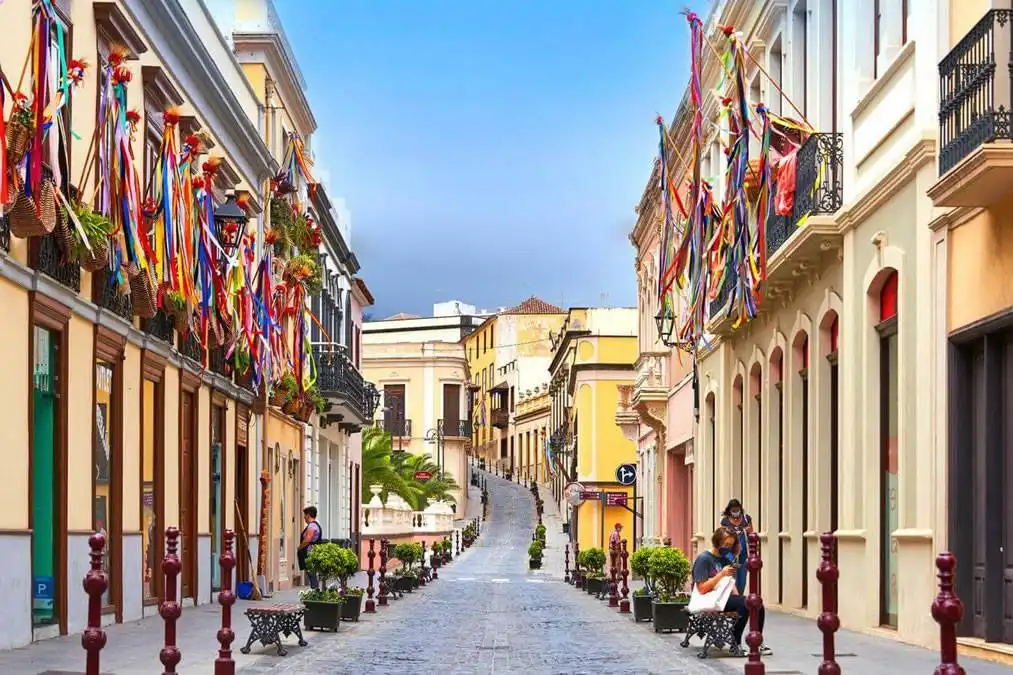
Situated on an elevated plateau in the north of the island, San Cristóbal de La Laguna — commonly known simply as La Laguna — served as Tenerife’s first capital. Established in 1497, the city holds a unique place in urban architectural history: it was the world’s first unfortified colonial city designed using a precise geometric grid system.
Rather than building defensively with encircling walls, urban planners applied Renaissance navigation principles and philosophical concepts to organise the space peacefully and openly. Broad, straight streets mapped out the city, anchored by central public squares, noble mansions, and grand churches.
This exact layout served as the direct architectural template for dozens of Spanish colonial cities established across the Americas, including Havana, Cartagena, and Lima. According to the official UNESCO World Heritage listing for San Cristóbal de La Laguna, the city represents an exceptional "town-territory" model that facilitated a vital interchange of influences between European and American cultures.
Walking down streets like Calle San Agustín, visitors encounter original 16th- to 18th-century mansions featuring distinctive Canarian pine balconies, vibrant stucco facades, and shaded inner courtyards (patios) that reflect a blending of Mudéjar and Iberian design traditions.
As maritime trade exploded across the Atlantic, Tenerife became a primary target for rival European powers, privateers, and pirates. Capitalising on its deep-water harbour, Santa Cruz de Tenerife evolved from a modest fishing village into the island’s defensive and commercial stronghold.
The strategic importance of Santa Cruz is best reflected in its military heritage. The city’s coastal fortresses repeatedly repelled naval assaults from English forces, most notably in July 1797 during the Battle of Santa Cruz. Rear-Admiral Horatio Nelson launched an amphibious assault aimed at capturing the port and its treasures. The Canarian militia and Spanish garrison mounted a fierce defence, thwarting the invasion and inflicting a decisive defeat on the Royal Navy.
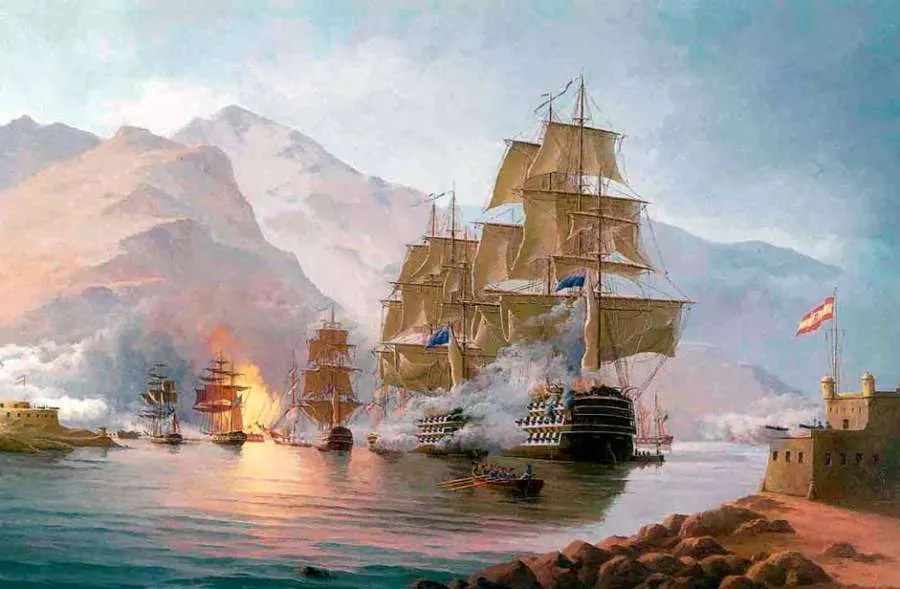
It was during this clash that Nelson suffered the loss of his right arm to a cannon shot. Today, the remains of the Castle of San Cristóbal lie preserved beneath the Plaza de España, offering a tangible link to the days when Tenerife stood as an impregnable Atlantic fortress.
Tenerife’s colonial heritage cannot be properly absorbed through the window of a passing tour bus or rental car. The historical core of cities like La Laguna and Santa Cruz consists of pedestrianised zones, narrow lanes, and concealed courtyards designed long before the motor vehicle.
Driving past these sites strips them of context; the architectural detail, historical markers, and atmospheric ambience require a slow, deliberate pace. To truly understand the stories behind the colonial facades, joining one of the local tours in Tenerife is highly recommended for visitors who want more than a superficial glance. Guided walking tours bring the stone archways and historic plazas to life, illuminating how local merchants, clergy, and indigenous populations navigated the shifting tides of empire.
Tenerife’s identity reaches far deeper than its popular coastal resorts. By stepping off the beaten track and dedicating at least one day to exploring the island's interior towns on foot, travellers gain access to a living museum of Atlantic history. From the UNESCO-listed streets of La Laguna to the historic sea defences of Santa Cruz, Tenerife’s colonial past offers a rich, practical reward for those willing to discover it one step at a time.