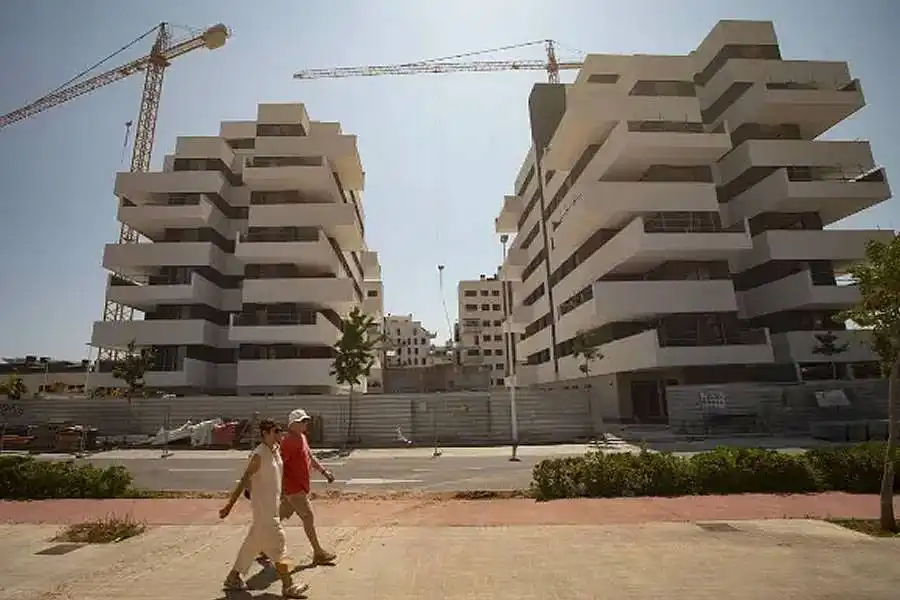
More than 30,000 newly built homes remain unsold in the Canary Islands, despite ongoing concerns over housing shortages and soaring property prices, according to new figures released by Spain’s Ministry of Housing.
The data shows that the Canary Islands had a total housing stock of 1,102,198 properties at the end of 2025, an increase of 0.3% compared with the previous year. Of those, 30,055 were newly built homes that had still not been sold, representing a 2.4% increase in unsold new-build properties.
The figures come at a time when the Canary Islands is experiencing the fastest rise in new home prices anywhere in Spain, with values climbing by 12% over the past year.
Where are these unsold properties?
Of the 30,055 unsold new-build properties across the archipelago, 18,788 are located in the province of Santa Cruz de Tenerife (Tenerife and the western islands), while 11,267 are in Las Palmas de Gran Canaria (Gran Canaria, Lanzarote and Fuerteventura).
Santa Cruz de Tenerife now ranks as the seventh province in Spain with the highest volume of unsold new homes, accounting for 4.15% of all available new-build housing stock nationwide.
The housing stock is split almost evenly between the two provinces, with 558,773 homes in Las Palmas and 543,425 in Santa Cruz de Tenerife.
Housing Availability Still a Major Issue
The report highlights a contradiction at the heart of the housing debate in the Canary Islands. While thousands of newly built homes remain unsold, many residents continue to struggle to find affordable housing as demand significantly outpaces supply.
Of the homes recorded in the Canary Islands, 855,022 are classed as primary residences, while 260,001 are categorised as non-primary homes, including second homes and other non-permanent residences.
Housing affordability has become one of the most pressing political and social issues across the islands, particularly in areas heavily affected by tourism, population growth and rising property investment.
National Picture
Across Spain, the total housing stock reached 27.1 million properties by the end of 2025, an increase of almost 95,000 homes compared with the previous year.
At the same time, the number of unsold new-build homes nationwide fell by 5.7% to 452,670 properties, marking the first significant reduction after two years in which the stock had stopped declining.
Unsold new-build homes now represent around 1.7% of Spain’s total housing stock. More than 60% of Spain’s remaining unsold new homes are concentrated in four regions: Andalusia, Catalonia, Madrid and the Valencia region.
Meanwhile, provinces along the Mediterranean coast continue to hold some of the largest surpluses of unsold housing, joined by Madrid, Toledo, Seville and Santa Cruz de Tenerife.
Legacy of the Property Boom
Spain’s stock of unsold new homes remains well below the levels seen after the collapse of the property bubble. The highest figure on record was reached in 2009, when almost 650,000 newly built homes remained unsold following the financial crisis.
Although much of that surplus has gradually been absorbed over the past decade, the latest figures underline the complex challenges facing the housing market in the Canary Islands, where rising prices, limited availability and growing demand continue to place pressure on both residents and policymakers.
With housing costs continuing to rise faster in the Canary Islands than anywhere else in Spain, the debate over how to increase availability and improve affordability is expected to remain firmly in the spotlight throughout 2026.