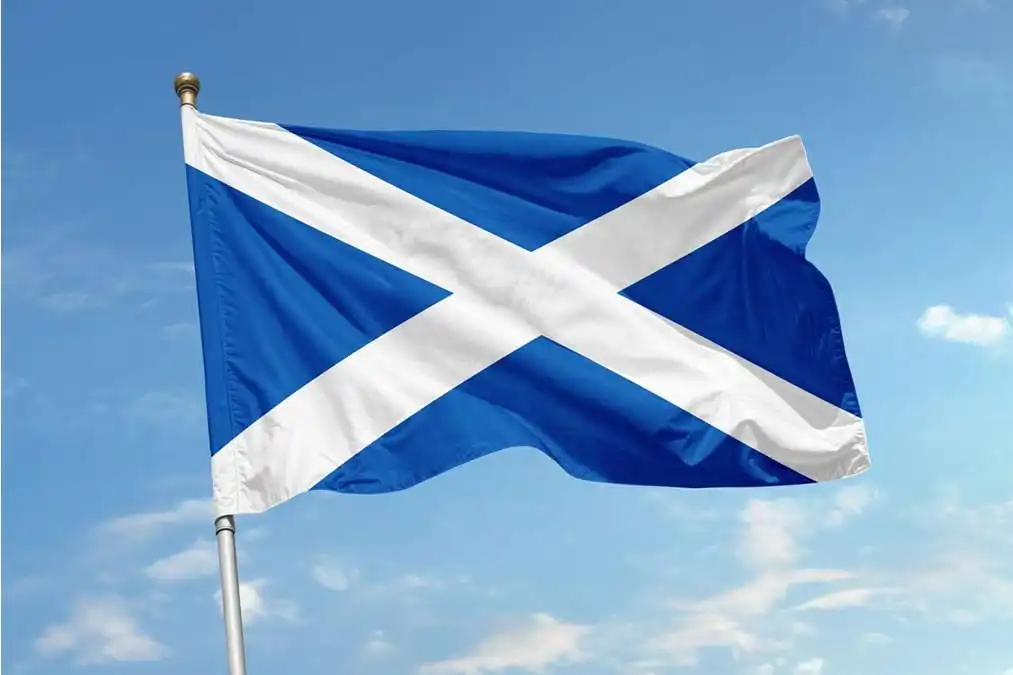
The striking similarity between the flag of Tenerife and the national flag of Scotland has long puzzled residents, tourists and even British diplomats.
At first glance, the two flags appear almost identical: both feature a white diagonal cross, known as a saltire, on a dark blue background. But despite their near-perfect visual match, the origins of the two flags could not be more different.
Tenerife’s Flag Was Born from Naval Bureaucracy
Unlike Scotland’s deeply religious and medieval symbolism, Tenerife’s flag owes its existence to maritime administration and pure coincidence.
The design dates back to a Spanish Royal Order issued on 30th July 1845, when the government assigned different naval signal flags to Spain’s maritime provinces.
The purpose was purely practical: merchant ships needed a quick way to identify which province they belonged to while at sea and approaching ports.
Under the system, the maritime province of the Canary Islands — based in Tenerife at the time — was randomly assigned the blue flag with a white diagonal cross.
Ships from the province were required to fly the signal flag alongside the Spanish national flag for identification purposes.
More than a century later, in 1989, the Cabildo de Tenerife officially adopted the old naval signal as the island’s representative flag.
Scotland’s Flag Comes from Legend and Religion
Scotland’s famous Saltire, meanwhile, is linked to centuries of religious tradition and national mythology.
The white diagonal cross represents the cross on which Saint Andrew — Scotland’s patron saint — was supposedly martyred. According to Christian tradition, Saint Andrew requested to be crucified on an X-shaped cross because he did not consider himself worthy of dying in the same way as Jesus Christ.
The origins of Scotland’s flag are also tied to a legendary 9th-century battle, during which a Scottish king is said to have prayed for divine help before combat.
Legend says a giant white saltire appeared in the sky before victory was secured. Following the battle, Saint Andrew was declared Scotland’s patron saint and the symbol became one of the country’s defining national emblems.
A Shared Design — But Completely Different Histories
Although the two flags share the same iconic design, historians stress that the resemblance is entirely coincidental.
One emerged from centuries of faith, legend and national identity. The other was simply the result of a 19th-century naval identification system that accidentally assigned Tenerife the same colours and pattern already associated with Scotland.
Today, however, the unexpected similarity remains one of the Canary Islands’ most curious historical coincidences — and a source of fascination for visitors from both Tenerife and Scotland alike.