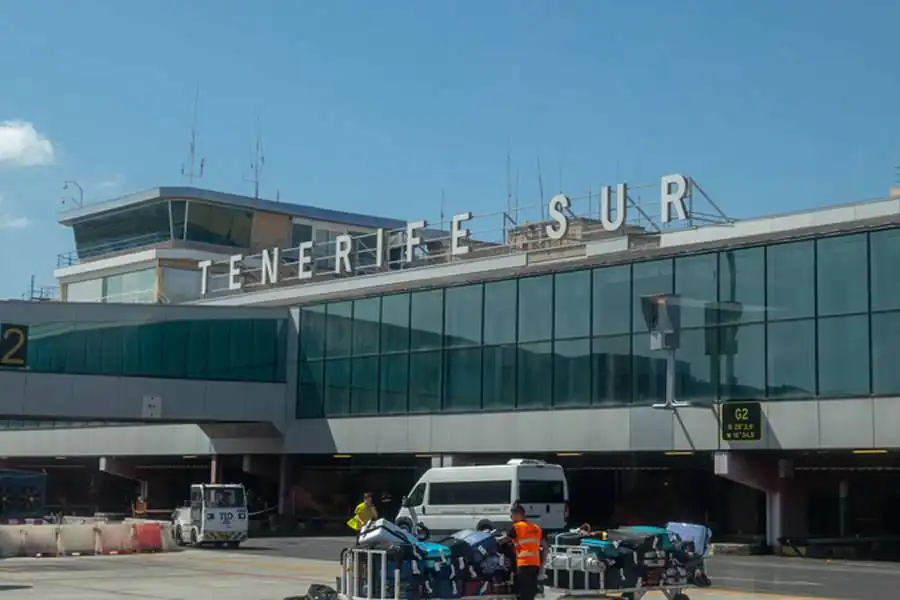
Plans for the major redevelopment of Tenerife South Airport have suffered a significant setback after a €464 million construction tender failed to attract a single bid form construction companies to carry out the work.
Airport operator Aena will now have to reformulate the tender before attempting to award the contract again, potentially adding another hurdle to the long-awaited transformation of the island's busiest airport.
The contract covers the comprehensive remodelling of the terminal area at Tenerife South Airport and has a net tender value of €464.1 million. Including taxes, the tender was valued at almost €496.6 million.
According to Aena's official procurement information, companies had until 15th September to submit their offers.
However, reports published on Friday morning say the process closed without any construction company submitting a bid.
The failed tender is particularly significant because the project represents the largest component of the extensive investment planned for Tenerife South Airport over the next few years.
Aena is expected to invest around €550 million at the airport through to 2031, with much of that expenditure connected to the terminal redevelopment.
The planned work includes a comprehensive overhaul of the terminal building, strengthening and renovating existing sections while demolishing and reconstructing other parts.
It is intended to address long-standing concerns over an airport that handles millions of passengers every year and is particularly important to Tenerife's tourism industry, as it is the principal gateway for visitors from the UK and Ireland.
Why haven’t companies bid for the work?
Industry sources cited by Cinco Días have linked the absence of bids to several factors.
These include the complexity of carrying out a major airport project over an eight-year construction period, the additional logistical challenges and costs associated with working on an island more than 1,200 kilometres from mainland Spain, rising material prices and wider geopolitical uncertainty.
Construction industry representatives have also raised concerns about Aena's contracting model and the extent to which contractors are exposed to changing costs during lengthy infrastructure projects.
The Tenerife contract does contain mechanisms allowing some construction costs to be reviewed, but these are subject to limitations.
Aena's official tender documentation puts the net contract value at €464.10 million, with an estimated total contract value of €482.66 million.
The project was being tendered through a negotiated procurement procedure.
Attention will now turn to how Aena restructures the contract and, importantly for passengers and the Tenerife tourism sector, whether having to launch another procurement process will affect the planned timetable for the airport redevelopment.
The wider programme had been expected to see the main construction phase begin during the coming years and continue beyond 2030.
Aena has not abandoned the redevelopment. The immediate problem is finding a contractor prepared to undertake its largest and most complex element under commercially acceptable terms.