Three dead in suspected hantavirus outbreak on Atlantic cruise ship
Three people have died and a UK national is seriously ill in hospital after a suspected hantavirus outbreak on a small cruise ship in the Atlantic Ocean.
The operator of the MV Hondius ship, tour company Oceanwide Expeditions, said a Dutch husband and wife, as well as a German national, had died but the cause has not yet been established.
However, the Dutch company said hantavirus has been confirmed in the case of the 69-year-old UK national who is in intensive care in Johannesburg, South Africa.
Hantavirus is usually passed to humans from rodents via their faeces, saliva or urine. It can cause severe respiratory illness. Rarely, it can be transmitted between people.
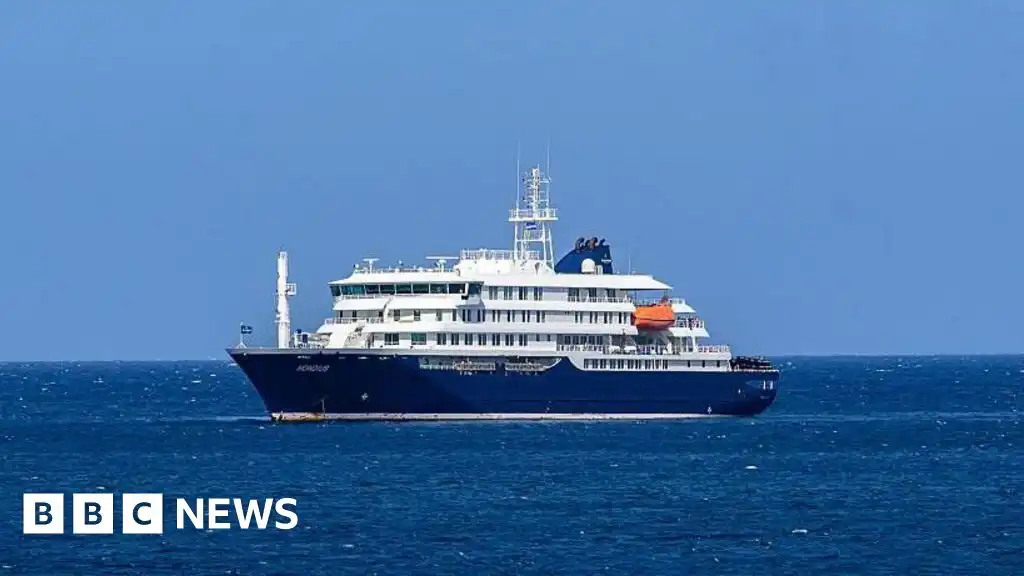
The MV Hondius vessel is currently off the coast of Cape Verde and has 149 people onboard.
Oceanwide Expeditions said there were also two crew members on board "with acute respiratory symptoms, one mild and one severe".
They were of British and Dutch nationality and both required urgent medical care, it said. It said it had not been established that hantavirus had been confirmed in the pair. And it added that no other persons with symptoms had been identified.
The World Health Organisation (WHO) said in a statement it had identified seven cases of hantavirus as of the 4 May. Of those, two have been confirmed in a laboratory, and five are suspected cases.
Negotiations are in progress with local authorities following what Oceanwide Expeditions described as "a serious medical situation".
Outlining a timeline, the company said a passenger had become unwell while aboard and died on 11 April.
His cause of death could not be determined, and his body was taken off the ship after it docked at St Helena on 24 April.
The passenger's wife also disembarked on St Helena and the firm said it was told she had become unwell during the return journey and later died.
"At this time, it has not been confirmed that these two deaths are connected to the current medical situation on board," it added.
On 27 April, the firm said, another passenger - the British national - became seriously ill and was "medically evacuated" to South Africa.
The 69-year-old remains in a critical but stable condition in Johannesburg after it was confirmed a variant of hantavirus had been identified.
The firm added that on Saturday, a third passenger onboard MV Hondius died.
The cause of death has not been established, Oceanwide Expeditions said. It confirmed the passenger was German.
Dr Aaron Motsoaledi, South Africa's minister of health, said of the British patient that he was critical and had been admitted to a private facililty.
"He's being taken care of. As you know, hantavirus, like all viruses, don't have any specific treatment, so they are giving symptomatic treatment and support as much as they could."
He said health workers and anyone who had contact with the patient would now be traced and tested.
A UK government spokesperson said the foreign office was in touch with the man's family and that consular teams were operating in the UK, South Africa, Spain and Portugal to support British nationals.

Oceanwide Expeditions said the cause of the deaths were being investigated.
"The disembarkation of passengers, medical evacuation and medical screening require permission from, and co-ordination with, the local health authorities," it said.
"Local health authorities have visited the vessel and assessed the situation.
"The medical transfer of the two ill persons on board has not yet taken place."
It added that the option of sailing on to Las Palmas or Tenerife was being considered "to be the gateway for disembarkation, where further medical screening and handling could take place".
The World Health Organization (WHO) said it was "acting with urgency" to support the MV Hondius, and thanked South African authorities for taking care of the British patient.
WHO's regional director for Europe, Dr Hans Henri P Kluge, said: "I am in close contact with our teams to ensure a co-ordinated, science-based response.
"Hantavirus infections are uncommon and usually linked to exposure to infected rodents.
"While severe in some cases, it is not easily transmitted between people. The risk to the wider public remains low. There is no need for panic or travel restrictions."
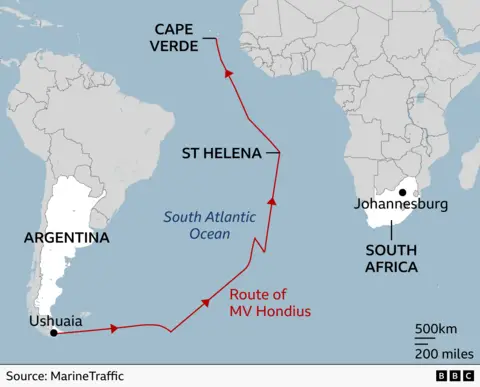
According to the South African government, MV Hondius departed from Ushuaia in southern Argentina about three weeks ago, before it completed its journey to Cape Verde, where it is anchored outside the capital, Praia.
It is described as a 107.6m (353ft) polar cruise ship, with space for 170 passengers in 80 cabins, along with 57 crew members, 13 guides and one doctor.
One passenger onboard the MV Hondius, who asked to remain anonymous, told the BBC: "The latest word is that a plane is on its way and once it gets here three people will be evacuated from the ship and flown straight to Europe.
"Then the rest of us will almost certainly sail to the Canary Islands.
"The Cape Verde authorities clearly want nothing to do with us. This is what we're hearing from the captain and staff. From what I can see the mood (on the ship) is pretty good.
"Only one person has been tested (the one now in South Africa) and he tested positive for hantavirus. So, we don't actually know yet if the other cases are that or something unrelated.
"If they are all hantavirus then the transmission is a bit mysterious. We've been informed that there are no rodents on board, and person-to-person transmission is difficult/rare.
"Hopefully the other patients on board will be tested soon and then we'll know better what's going on."
President of the Cape Verdean Public Health Institute, Maria Da Luz, said passengers would not be disembarking in Cape Verde in order to protect the local population, Cape Verde's media outlet A Nacao reports.
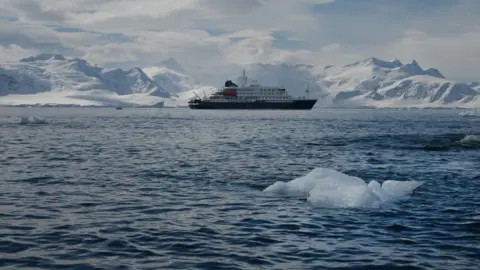
Oceanwide Expeditions said strict precautionary measures were in process on board, including isolation measures, hygiene protocols and medical monitoring.
"All passengers have been informed and are being supported," it said.
"Oceanwide Expeditions is in close contact with those directly involved and their families, and is providing support where possible."
Microbiologist Siouxsie Wiles told the BBC the time between people being exposed to hantavirus and showing symptoms could be anywhere from one to eight weeks.
"With this incubation period are we going to see more people coming down with the disease in the next days and weeks?"
The UK Foreign Office told the BBC it was monitoring reports, and ready to support British nationals.
Hantavirus was in the headlines last year after the wife of Oscar-winning actor Gene Hackman died from a respiratory illness linked to hantavirus in March 2025.
Are you on the ship or do you know someone who is? If you feel able to do so, please get in touch by using this link or the form below.