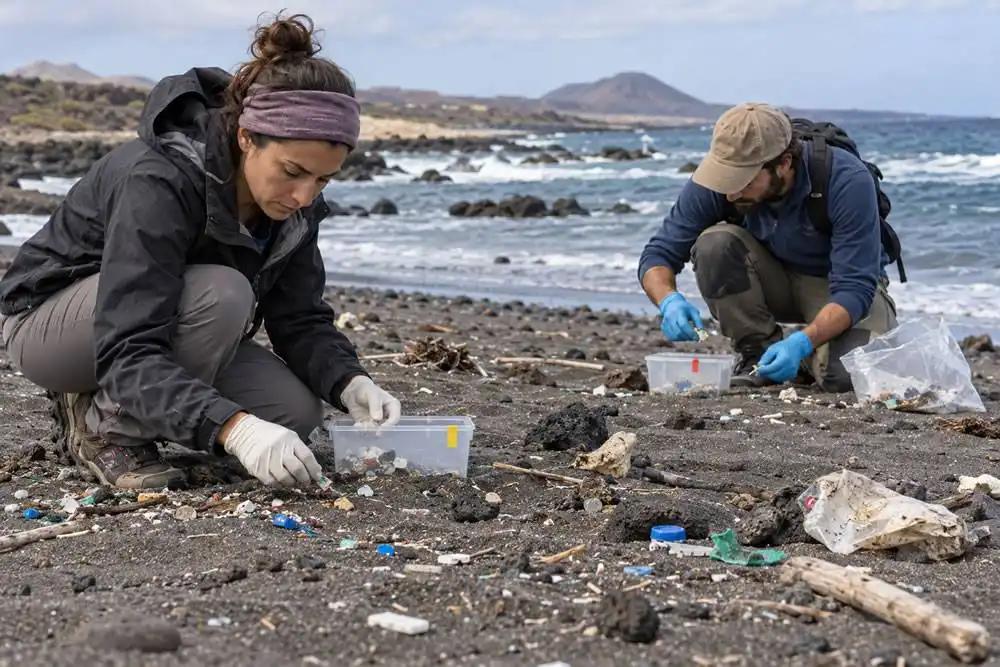
Scientists are investigating the origins of rubbish found on 30 beaches across the Canary Islands as part of a European environmental research project aimed at tackling marine pollution.
The study involves collecting, identifying and analysing waste washed ashore or left on beaches, with researchers hoping to establish where the rubbish comes from and how it reaches the islands' coastlines.
Rather than simply measuring how much litter is present, the project aims to identify the types of waste involved, possible sources and changes throughout the year.
Beaches monitored throughout the year
The research covers 30 beaches across the archipelago, with four sampling campaigns planned each year to build a picture of how coastal pollution changes between seasons.
One of the latest sampling sessions took place on Sunday (11th October) at Tazacorte, on the west coast of La Palma.
During these surveys, collected rubbish is classified and recorded, allowing researchers to compare findings between locations and identify recurring pollution patterns.
The information could help establish whether particular types of waste are associated with activities at sea, coastal recreation or other human activities.
Why the findings matter for residents and tourists
Beaches are among the Canary Islands' most important natural attractions and are central to the archipelago's tourism economy.
Marine litter affects the appearance of coastal areas and can also pose risks to wildlife, particularly when animals become entangled in discarded materials or ingest plastic fragments.
Understanding the origins of waste is therefore important for both environmental protection and the long-term management of beaches used by residents and millions of visitors each year.
The research could also help local authorities and environmental organisations target prevention measures more effectively.
Moving beyond beach clean-ups
Beach-cleaning operations remove rubbish that has already reached the coastline, but they do not necessarily address how it got there.
By analysing the materials collected and comparing results over time, researchers hope to provide evidence that can support more effective waste-management policies and pollution prevention.
The four annual sampling rounds will also help distinguish persistent problems from seasonal changes.
The project is still collecting data, and no final conclusions about the principal sources of rubbish on the 30 beaches have been announced.
Its findings could eventually help the Canary Islands protect their coastline by focusing more attention on preventing waste from reaching the sea in the first place.