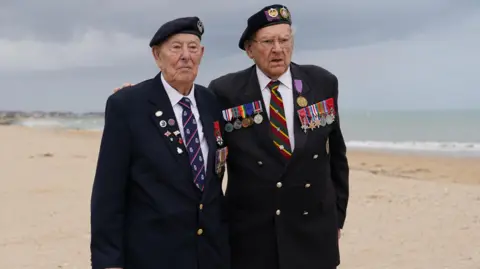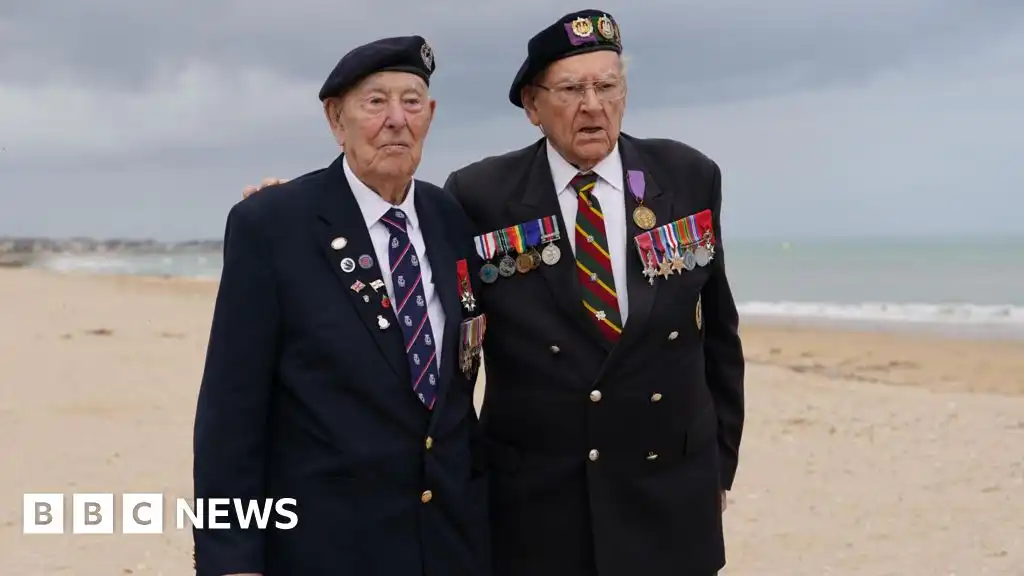
Some of the last remaining surviving UK veterans are commemorating the anniversary of D-Day, 82 years since the allied invasion of northern France in World War Two.
The huge operation, which took place on 6 June 1944, saw British, American and Canadian troops storm beaches along the Normandy coastline to begin the liberation of France from Nazi occupation.
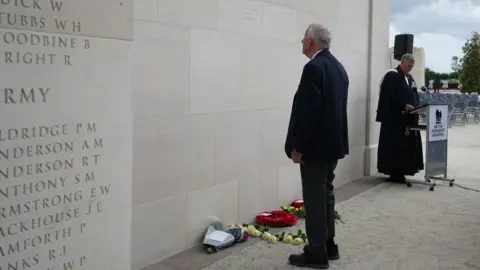
This year's commemorative events will be the first since nearly 100 more names were added to the British Normandy Memorial, which lists troops who died in the campaign.
"To most people coming here they're just a series of names," 100-year-old veteran Kenneth Hay told the BBC. "To people like myself, they're people, I can see their faces."
At the British Normandy Memorial above what was known as Gold Beach in 1944, an extra 98 names have been added to its roll of honour.
Research has uncovered men who fought in the battle - but inaccurate records meant their names were not carved on to the memorial's walls - until now.
In some cases families have managed to provide evidence that a relative was killed in Normandy, and in others men who were mortally wounded there but died in hospital back in Britain were also left off the original lists.
Cecil Green is among the newly-added names.
He was mortally wounded in Normandy, but his death in a British hospital meant he had not been formally commemorated.
"I was really pleased, I cried," Cecil's son John told the BBC, after he learned his campaign to have his father's name added had been recognised.
"It's a strange mixture of being glad and happy and sad at the same time," John said, as he touched the stone where his father's name is now inscribed.
This year will see the smallest number of Normandy veterans to have attended the ceremony since the memorial opened in 2021, with only six confirmed to be attending.
D-Day was the largest military seaborne operation ever attempted, and marked the start of the campaign to liberate Nazi-occupied north-west Europe.
It involved the simultaneous landing of tens of thousands of troops on five separate beaches in Normandy.
More than a year in the planning, D-Day was originally set to start on 5 June, judged to be the most likely date to combine calm seas, a full moon and low water at first light. However, storms meant it was delayed by 24 hours.
The "D" simply stands for "day". D-Day is a military term for the first day of an operation.
Commemorations to mark the 82nd anniversary started with French schoolchildren walking across Juno Beach to mark H-Hour, the time at which British servicemen were deployed.
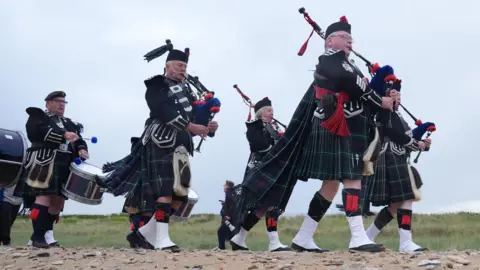
Serving military personnel, the grandson of British Commander Field Marshal Montgomery and pipers from the Jedburgh Pipe Band marched with the schoolchildren.