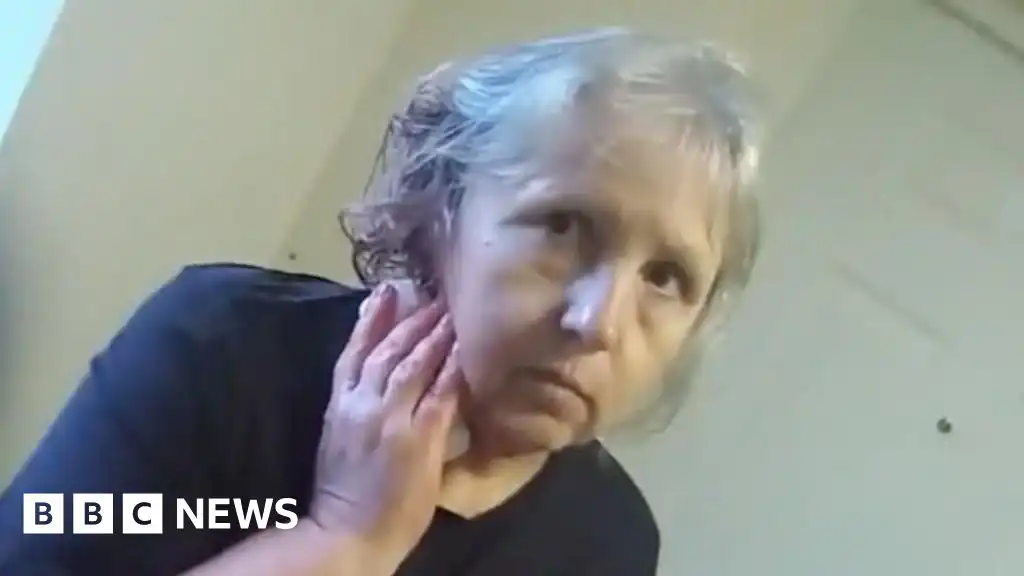
A woman has been jailed for killing her mother after deciding she "couldn't go on" caring for her.
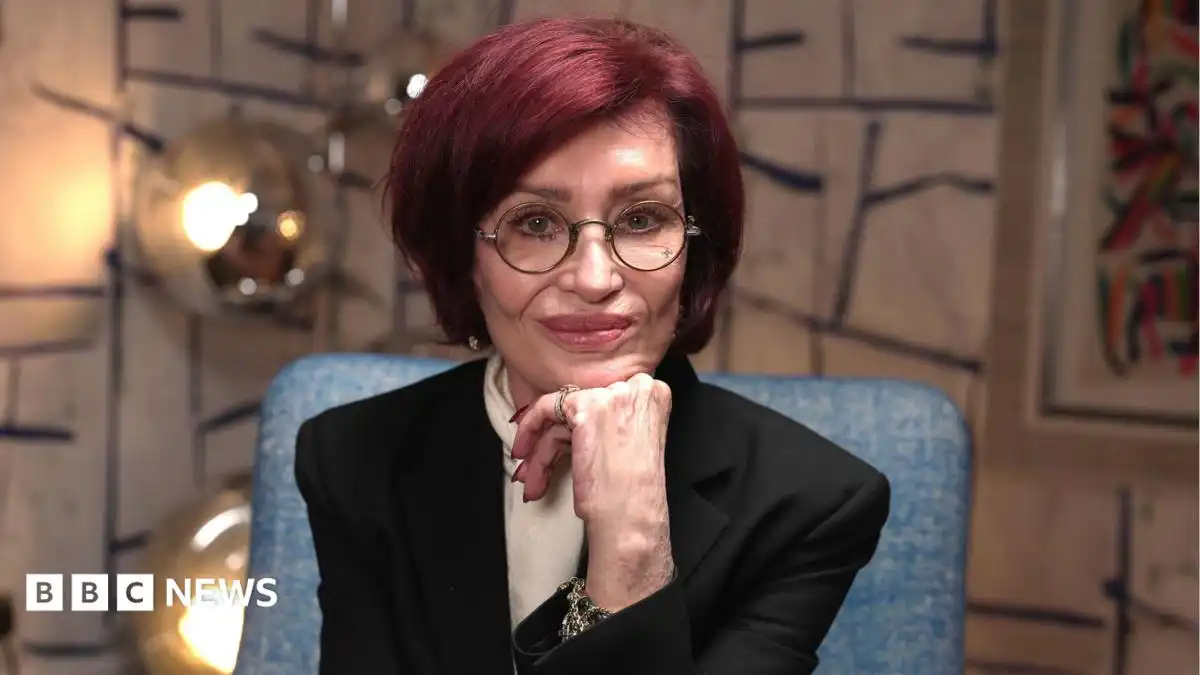
Stefania Glowka, 64, was found not guilty of murdering Tamara Glowka, 86, at their home in Devizes, Wiltshire on Christmas Day 2025, but pleaded guilty to manslaughter based on diminished responsibility.
The defence argued Glowka's depression had substantially impaired her ability to make rational judgements on the night she strangled her mother with a belt before trying to take her own life.
Sentencing Glowka to eight years in prison at Bristol Crown Court earlier, Judge Julian Lambert said: "This is an utterly extraordinary and deeply sad case."
Addressing Glowka, who he described as a "dutiful considerate daughter", Judge Lambert said: "Your mother had no one else in the world but you.
"You had no one else in the world but your mother. You were devoted to one another and loved your mother as much as she loved you.
"No one could have done more for a parent," he said.
Judge Lambert said depression had also "distorted" Glowka's care for her mother and it had been "very difficult" to decide a sentence.
Ahead of sentencing, a letter written by Glowka was read out to the court.
"I had a shining light in my life and I extinguished it," she said in it. "My mother is with me every day, I still talk to her, I hear her voice.
"I made myself a pariah. I feel I do not have the right to return to society.
"I feel very bad that I let her down when she needed me the most," it added.
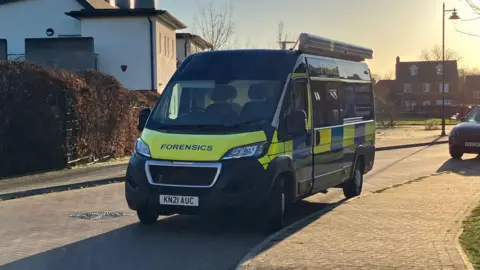
Police had been called to reports of a serious assault at 08:10 GMT on 25 December at a flat in Keepers Road.
Glowka had made her mum her favourite meal on Christmas Eve before they both went to sleep in their shared bedroom.
When Tamara got up to use the toilet, her daughter strangled her with a belt and then attempted to end her own life.
After waking up hours later, she called 999 and said she had "committed a crime and needed to be held responsible".
The jury was told Glowka, who never married or had children, had wanted to "let her mum go" after she was diagnosed with schizophrenia and both women experienced a deterioration in their mental health.
She told the court her thoughts of suicide dated back to 2008 and but had realised she "couldn't go on" that Christmas.
The court heard Stefania Glowka, who grew up in Poland before moving to the UK in the early 1990s, had a recurrent depressive disorder.
From 2004, she was the primary carer for her mother, who never learned English and towards the end of her life suffered from hallucinations and psychosis.
"I'm the only child of a single mother," Glowka said in a police interview that was played in court. "All my life it was just the two of us.
"We don't have any family. We are like two old dinosaurs at the end of the line."
She said she had thoughts of suicide going back to 2008, but it was at Christmas 2025 she realised she "couldn't go on".
Glowka told police it was a "spur of the moment" decision to strangle her mother, and told the court she "wasn't thinking clearly".
Simon Jones, prosecuting, argued it was a "deliberate act" that was carefully planned out.
Nicholas Corsellis, for the defence, said on Monday that Glowka was not making rational judgements because she was "acting in the fog of despair".
He also said she was "devoted to her mother" but was "increasingly struggling to cope", and her actions had "broke the habits of a lifetime and everything she had lived for".
"She made rational decisions in the morning, but this contrasts with the middle of the night when that function was terribly and substantially impaired," he said.
Dr Lucy Bacon, a consultant forensic psychiatrist, previously told the court Glowka's thoughts were "strongly coloured by her depressive illness" but she was capable of forming a rational judgement.
Bacon agreed with fellow psychiatrist Dr Richard Latham that her depression also did not substantially impair her ability to exercise control or understand her own conduct.
When cross-examined by the prosecution, Glowka accepted she was in control and understood what she was doing, and that she was capable of making rational judgements.
Responding to the case, Dr Siobhan O'Dwyer, associate professor at University of Birmingham, said her research had found: "One murder or murder suicide takes place every month in Wales and England perpetrated by unpaid carers."
Follow BBC Wiltshire on Facebook, X and Instagram. Send your story ideas to us on email or via WhatsApp on 0800 313 4630.