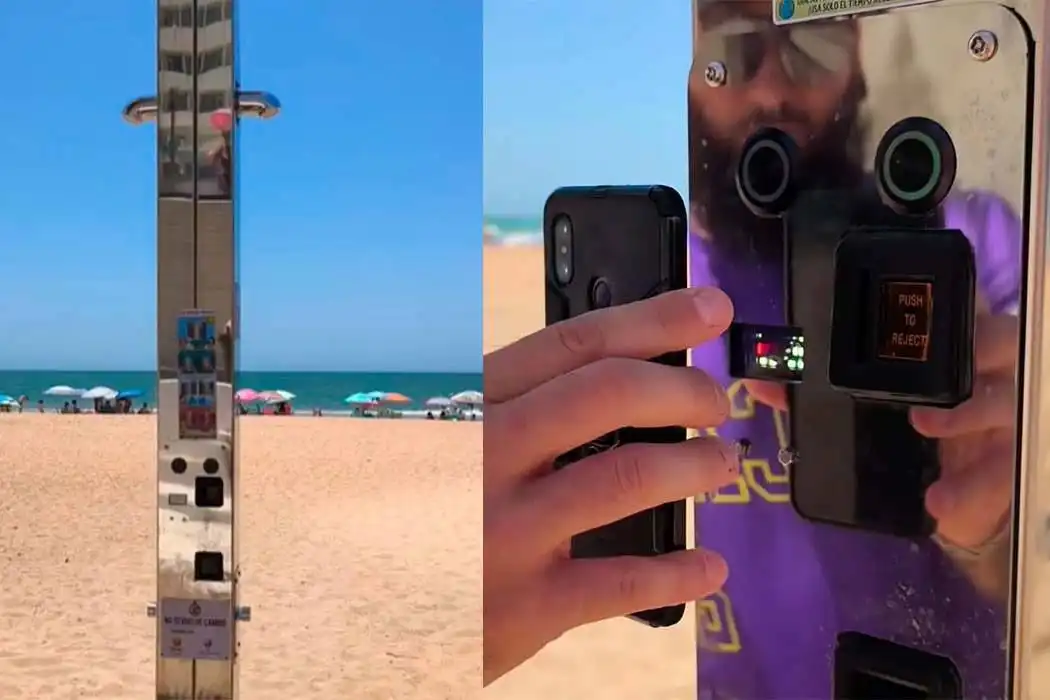
A controversial new “smart shower” system being tested on a Spanish beach has sparked debate after requiring users to pay and scan a QR code before they can rinse off sand and seawater.
The pilot project, currently installed at Matalascañas beach in southern Spain, is believed to be the first of its kind and is already attracting strong reactions from beachgoers, who fear it could pave the way for paid public beach facilities elsewhere.
The system replaces traditional free-to-use beach showers with digitally connected units designed to control water consumption during ongoing drought conditions affecting southern Spain.
Scan to Shower
Under the new system, users must scan a QR code with their smartphone to activate the water flow.
The process has drawn criticism from visitors who argue it is inconvenient and impractical, requiring people to bring mobile phones onto the beach and close to the water, increasing the risk of theft, damage or loss.
For those who do not use smartphones, including many elderly visitors, the shower also accepts coins. However, users have complained that the machine does not provide change.
Currently, the system remains in a testing phase and can be used free of charge while technical evaluations are carried out.
Charges Could Reach €1 Per Use
Project developers have already outlined proposed charges once the trial period ends.
If public subsidies are secured, the cost is expected to range between 20 and 30 cents per minute of use.
Without government financial support, however, the price could rise to as much as €1 per shower session, a figure critics have described as excessive for a basic public service.
The project was reportedly developed through a collaboration between local engineers, a hotel group and Almonte Town Hall as part of efforts to reduce water consumption and improve sustainability.
The introduction of the shower has triggered a wave of criticism online. Videos posted on social media have attracted tens of thousands of views, with many users expressing frustration that a facility installed on public land and funded, at least in part, through public resources could require direct payment from residents and visitors.
Sustainability Versus Accessibility
Supporters of the scheme argue that unrestricted beach showers can waste significant amounts of water, particularly during the busy summer season.
Local authorities and project backers insist the aim is not to generate profit but to encourage responsible water use and help cover maintenance costs.
They argue that introducing a small fee could significantly reduce unnecessary consumption while ensuring facilities remain operational and clean.
For now, the debate remains largely confined to one beach in Andalusia, but coastal municipalities across Spain are watching closely.
With drought concerns growing and pressure mounting on water resources, the Matalascañas trial could become a test case for how public beach services are managed in the future.
Whether beachgoers will accept paying to wash off sand and saltwater, however, remains an open question.