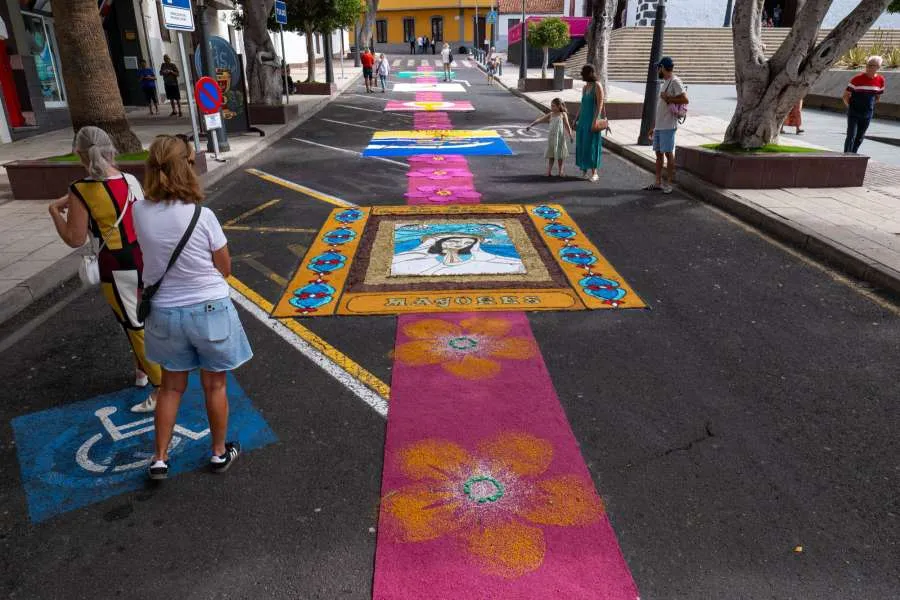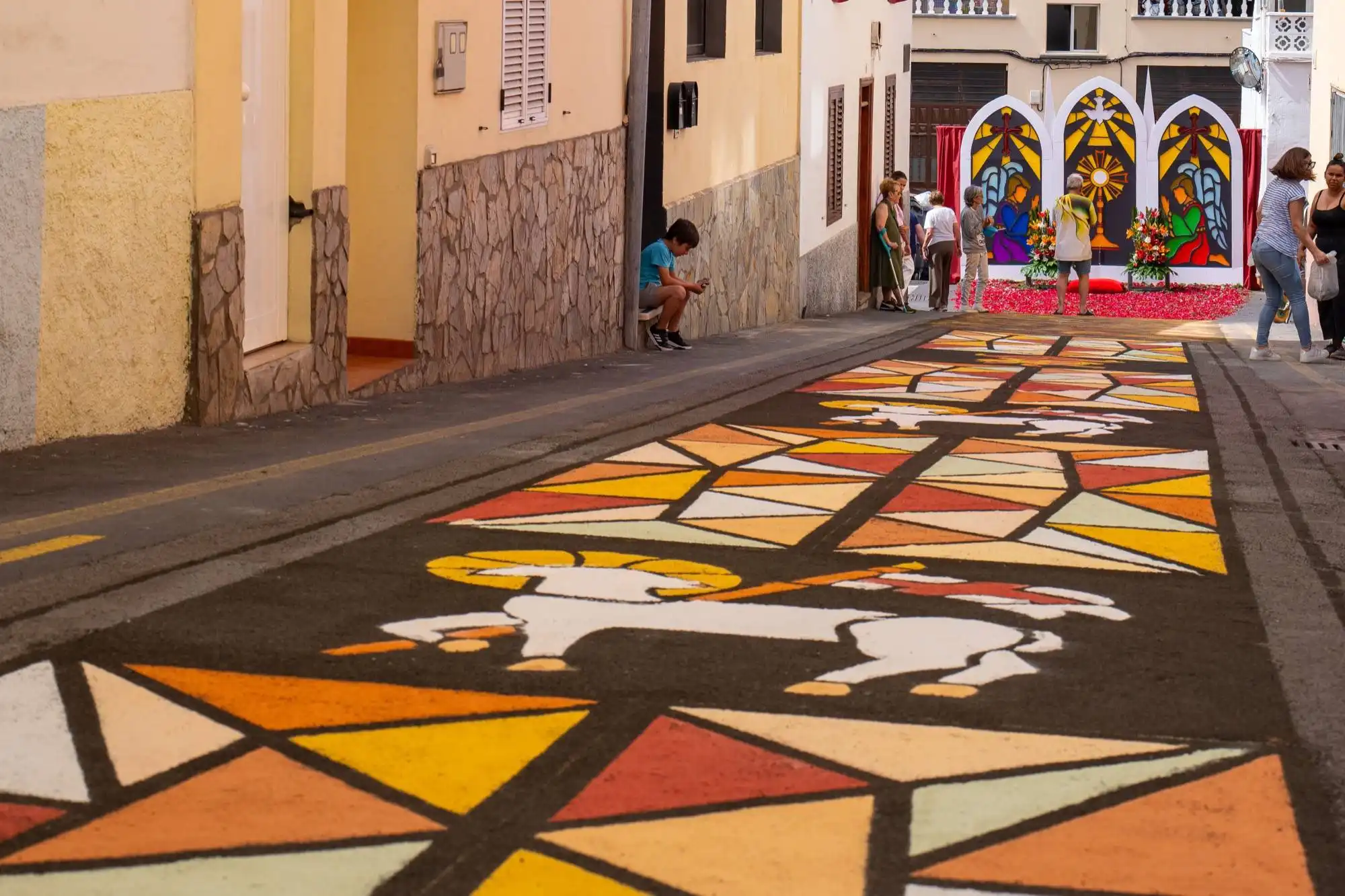
The streets of Adeje will once again be transformed into colourful works of art this weekend as the municipality celebrates its centuries-old Corpus Christi tradition of creating salt carpets.
Documented in the town since 1620, the tradition sees residents, cultural associations, sports clubs, parish groups and public safety organisations come together to decorate the streets with intricate designs made entirely from coloured salt.
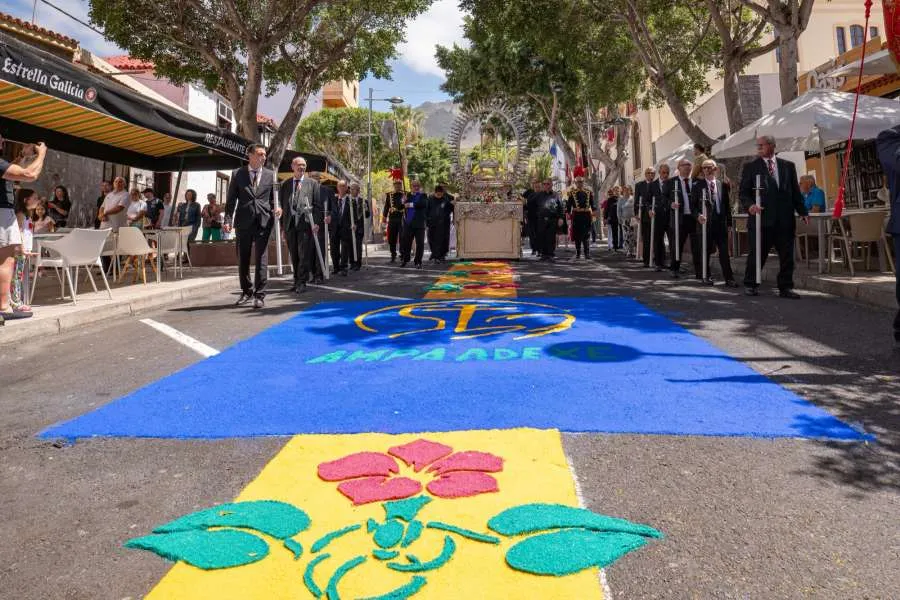
From 5pm this afternoon, Saturday, Calle Grande and Calle Corpus Christi will fill with volunteers preparing the carpets ahead of Sunday’s religious celebrations. On Sunday at midday, the parish of Parroquia de Santa Úrsula will host the solemn Corpus Christi mass, followed by the traditional procession of the Blessed Sacrament through the decorated streets, accompanied by the Brotherhood of the Blessed Sacrament and the Adeje Patronal Band.
More Than 120 Nationalities United
Adeje’s councillor for Culture, Adolfo Alonso Ferrera, described the celebration as an important symbol of community and unity in one of Tenerife’s most multicultural municipalities.
“Corpus Christi is one of those occasions when Adeje comes together in the streets to share something beyond religious beliefs,” he said, noting that residents from more than 120 nationalities participate in the event.
He added that traditions like this help strengthen social cohesion and encourage harmony between different cultures living in the municipality.
Thousands of Kilos of Coloured Salt
Ayuntamiento de Adeje and the Municipal Services Company EMSA support the event each year by supplying staff, materials and logistics for the creation of the carpets.
More than 8,500 kilos of salt and pigments are provided to the participating groups, while municipal workers help prepare the walkways between the designs and assist throughout the event.
A Tradition Dating Back to 1620
Historical records show the Corpus Christi celebrations in Adeje date back more than 400 years.
In 1620, Juan Bautista de Ponte ordered the official commemoration of the feast day, while in 1623 the Brotherhood of the Blessed Sacrament formally included the procession in its statutes submitted to the Bishop.
The same Brotherhood continues to take part in the celebrations today, maintaining an uninterrupted presence for over four centuries.
Older residents recall that the carpets were traditionally created using salt coloured with sulphur, charcoal and cochineal dye, taking advantage of the salt pans that once existed in southern Tenerife.
In recognition of the importance of the tradition, Adeje Town Hall renamed the street where most of the carpets are created in 1994, changing it from “18 de Julio” to Calle Corpus Christi.
Historic Religious Silverware
Among the most treasured elements of the procession are two pieces of 18th-century Canarian silverwork housed inside Santa Úrsula parish church.
These include a Baroque monstrance dating from 1748, attributed to silversmith Alonso de Sosa, and a Rococo-style monstrance created in 1784 by Antonio de Villavicencio.
Both pieces, crafted in gilded silver, continue to be used during the annual Corpus Christi procession through Adeje’s historic streets.