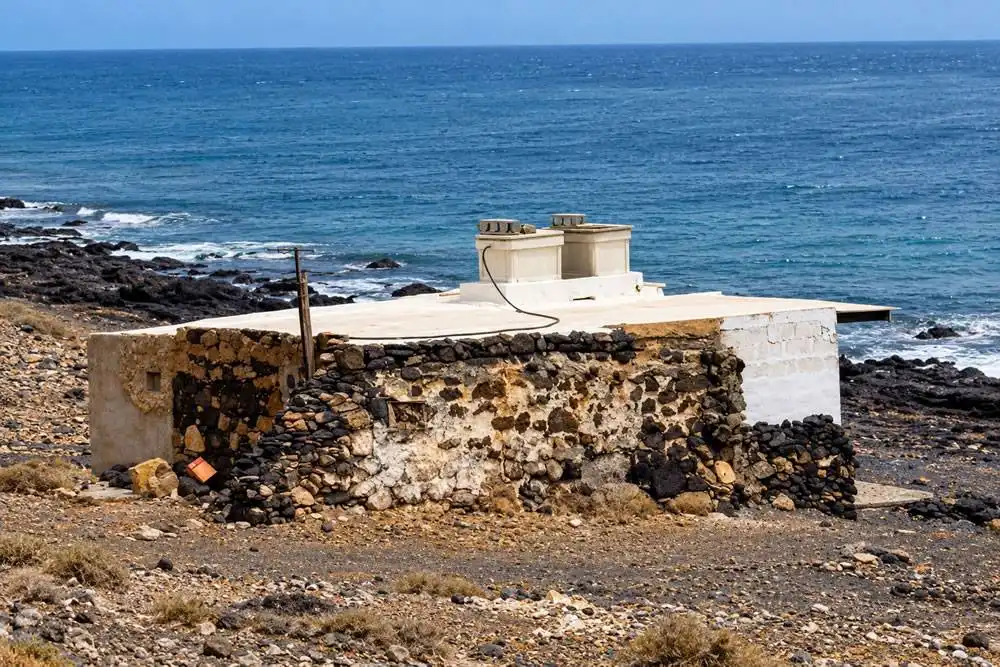
A new attempt has been launched to protect the Casa de la Cueva de la Negra in southern Fuerteventura from demolition, in the latest development in a story that has attracted considerable interest from Canarian Weekly readers.
We previously reported on the battle to save the property after plans to demolish it were halted amid concerns over its possible historical, archaeological and ethnographic importance.
Now, the Asociación Patrimonial El Efequén has taken the campaign a significant step further by formally asking the Cabildo de Fuerteventura to begin proceedings to have the property declared a Bien de Interés Cultural (BIC), or Site of Cultural Interest.
The association has registered its application with the Cabildo together with a report detailing what it considers to be the archaeological and ethnographic importance of the house and its surroundings.
El Efequén says the application has been prepared as a matter of urgency because of the continuing threat to the building.
Previous attempts to demolish the property halted
As previously reported, the first demolition was due to take place on 26th August, but the Cabildo adopted precautionary measures the previous day after its Cultural Heritage department concluded that further investigation was necessary to avoid potentially irreversible damage to cultural or archaeological heritage.
A further intervention took place on 21st September, when Guardia Civil officers and representatives of the Ministry for Ecological Transition arrived at the property intending to enter the house and prevent its continued use.
However, that operation was also stopped after the family's legal representatives argued that the required five working days' notice had not been given.
The continuing dispute has therefore moved beyond the original demolition order, with the latest application seeking formal heritage protection for the property.
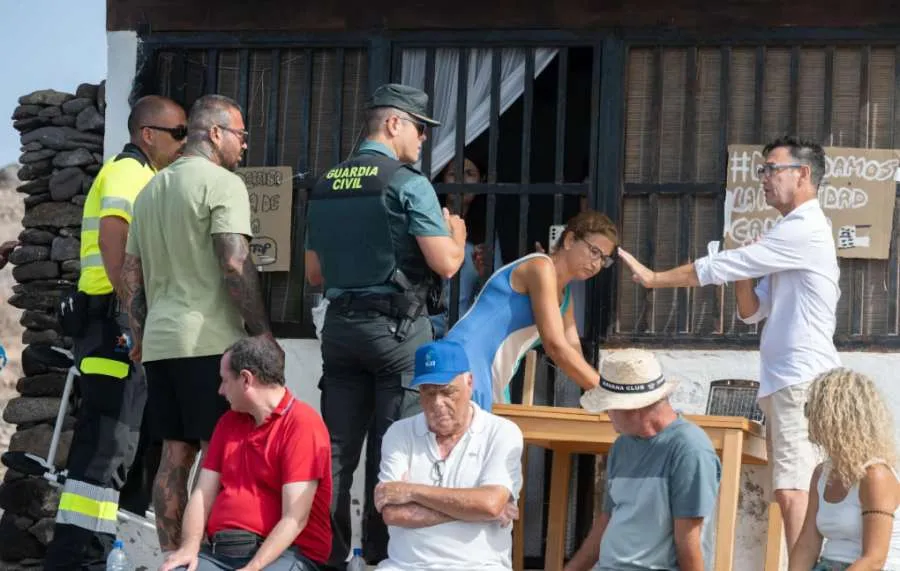
The Guardia Civil accompanied the Coastal Authority representatives who were attempting to carry out the eviction order, despite opposition from the owner's children and local residents. (Image: EFE/Carlos de Saá)
Calls for permanent protection
El Efequén points out that the Cabildo unanimously approved a motion on 26th September calling for the protection of Fuerteventura's traditional coastal settlements where there is clear ethnographic heritage value.
However, the group argues that political declarations need to be followed by concrete administrative action if the Casa de la Cueva de la Negra is to be protected.
According to the documentation submitted by El Efequén, the house was built in 1910 by Lorenzo Pérez Díaz, the grandfather of its current owner, Pascuala Roger Pérez.
The association highlights the property's traditional dry-stone construction and says it forms part of the history of coastal settlement in this area of Fuerteventura.
It also points to the presence of an indigenous shell midden, or conchero, in the area surrounding the property as further evidence of the archaeological significance of the location.
Part of Fuerteventura's traditional coastal history
El Efequén argues that houses such as this provide evidence of a traditional Majorero way of life in which families moved seasonally between inland areas and the coast.
During the winter, families were more closely associated with livestock and inland settlements, while summer periods on the coast were linked to fishing and gathering shellfish.
Much of the former settlement at Cueva de la Negra has already disappeared. A number of properties in the area were demolished in 2009, leaving the surviving house as one of the remaining physical reminders of the settlement.
The dispute has intensified because the State Coastal Authority considers the property to be within the maritime-terrestrial public domain and has pursued enforcement action under Spain's coastal legislation.
Heritage authorities, meanwhile, have raised concerns that demolishing the building before its cultural and archaeological significance has been fully investigated could cause irreversible damage.
The Canary Islands Government previously warned the State Coastal Authority about the potential destruction of cultural heritage if demolition proceeded.
What happens next?
The latest application does not mean that the house has been declared a BIC. El Efequén has asked the Cabildo to formally open the procedure through which that protected status could ultimately be granted.
The next key development will therefore be whether the Cabildo de Fuerteventura agrees to initiate those proceedings.
Canarian Weekly will continue to follow the case and update readers as the future of the Casa de la Cueva de la Negra is decided.