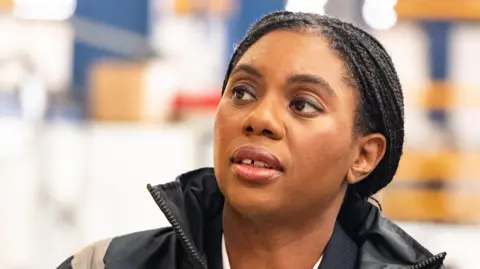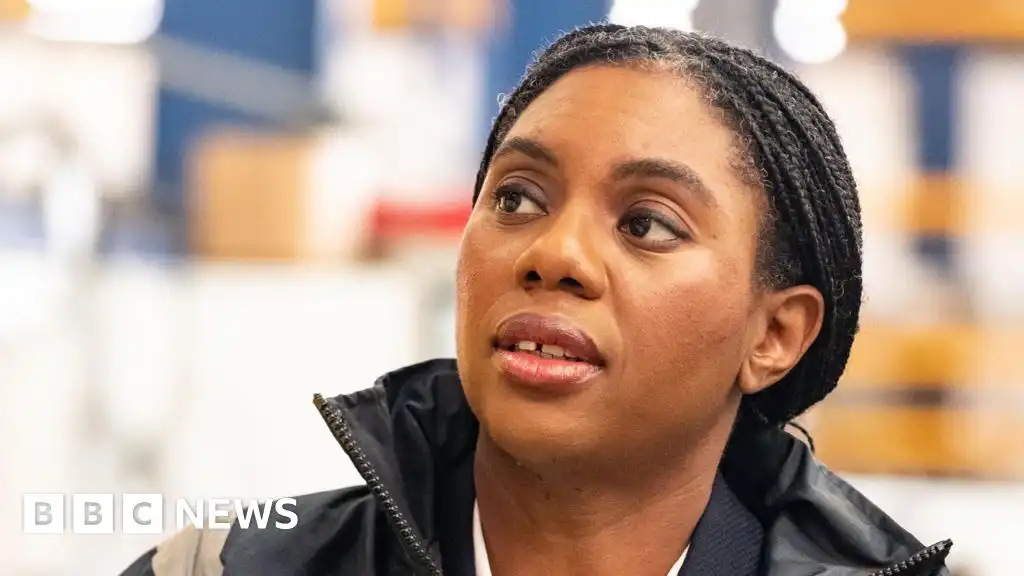
Conflict over identity politics in the UK could lead to civil war in the long term, Kemi Badenoch has said.
In an interview for a BBC Radio 4 documentary, England's Identity Crisis, the Conservative leader warned of rising tensions as groups on the left and the right direct "more and more hostility" towards people of every ethnicity.
The Conservative leader censured parties that use the political conflict to target voters from one community, an ingredient that she says could lead to an eventual civil war.
The interview was conducted before political tension erupted over policing, following the release of bodycam footage showing the handcuffing of murdered teenager Henry Nowak as he lay dying.
Both Prime Minister Sir Keir Starmer and Badenoch have called for politicians not to stoke division following the outcry about the teenager's murder, and subsequent protests on the streets of Southampton.
Speaking to the BBC for the documentary before the sentencing of Nowak's killer Vickrum Digwa, Badenoch said: "This is not a racist country. But now we are seeing more and more hostility to people of every ethnicity, whether they're English or not English, because people are bringing political conflict into an area where we didn't have political conflict.
"And it's the political conflict, I think, that is creating this tension.
"This is why it's really important that politicians understand this properly and have policies that make a difference, rather than use the political conflict as a way to get some votes from one particular community.
"Parties which do that, politicians who do that, they may get to benefit in the short term, but in the long term, that's how you end up with civil war."
When asked whether she was saying that the way to avoid a civil war was to avoid "fracturing" in society, she said: "We definitely need to avoid that fracturing, but we also need to focus on assimilation."
Badenoch did not name any political parties, but in the wake of the Gorton and Denton by-election in February she said it was "appalling that separatist campaigning was carried out in Urdu by the Green Party".
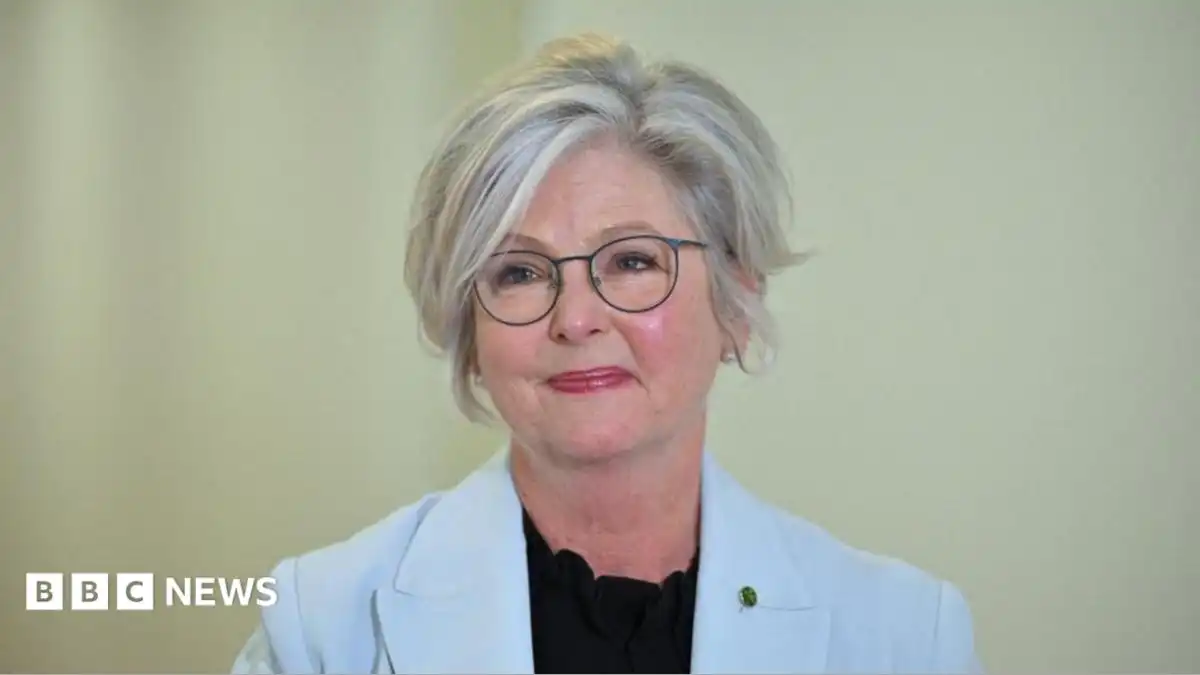
Hannah Spencer won the seat for the Green Party of England and Wales with a majority of 4,402. The Green Party was approached for comment.
The Conservative leader stressed that she was outlining a long term threat. Asked if the UK is potentially in civil war territory if this is not resolved, Badenoch said: "Not any time soon. No, I don't think we're potentially in a civil war scenario now.
"But if we don't sort it now, then we're leaving a much worse country to our children. We're leaving them to sort out some very complicated things."
The debate about English national identity has taken on a harder edge over the past year after some figures on the right said that Englishness cannot be acquired because it is related to ancestry.
This view came to prominence in February 2025 when the Russian-born podcaster Konstantin Kisin suggested that Rishi Sunak should be considered as British but not English because he is a "brown Hindu".
Kisin made his remarks after the political journalist Fraser Nelson told him on the Triggernometry podcast that the Southampton-born former Conservative prime minister is wholly English.
The GB News presenter and Reform UK supporter Matt Goodwin, told the Radio 4 documentary that he agreed with the idea that Englishness is related to ancestry.
"I view Britishness as a nationality and Englishness as an ethnicity," he said.
Reform UK leader Nigel Farage has said he does not want to draw "ethnic lines" on what being English is.
Speaking for the documentary, Culture Secretary Lisa Nandy was critical of the idea that nationality has to be related to ancestry.
Nandy, who is of mixed Indian and British heritage, said: "I do think it is a bit offensive to be honest. But I also think if it's designed to sort of appeal to working class communities like mine in Wigan, I don't think it has that effect at all."
A poll last year by More in Common suggested that 74% of English people believe that someone can be English regardless of their skin colour or ethnic background.
The Conservative leader said that part of Englishness is related to ancestry, but said there was another, civic side – the need to show an emotional commitment to the culture and values of the country.
"I believe that I am English when it comes to that civic identity. It's where I live. It's where I love, it's the football team that I support. But it's not in my blood. But it is in my children's blood and this is why I say it's a spectrum. It's very complicated."
Badenoch also said that nationalists in Scotland and Wales, who now run both devolved governments for the first time, had contributed to the worsening atmosphere.
In explaining her thinking about the long term threat of a possible civil war, Badenoch criticised elements on both the left and the right of the political spectrum.
She criticised some on the left for attacking English identity by criticising the empire and using phrases like white privilege. That, she said, has provoked a "backlash" which has led to ethno-nationalism – the idea that a national identity can only be derived through ancestry.
"We should stop trying to look for different ways to divide people and look for ways to bring people together," she said.
England's Identity Crisis is on BBC Radio 4 at 1.30pm on Sunday 7 June and from now on BBC Sounds