For two decades, this fixture has been settled by the men in the technical area as much as the players on the pitch. Rafael Benitez against Jose Mourinho, and then eight seasons of Jurgen Klopp against Pep Guardiola, the most absorbing coaching rivalry the Premier League has produced.
Both of those figures have gone. Liverpool vs Man City now arrives with two new voices in charge, and for the first time in years nobody can claim to know what the game will look like.
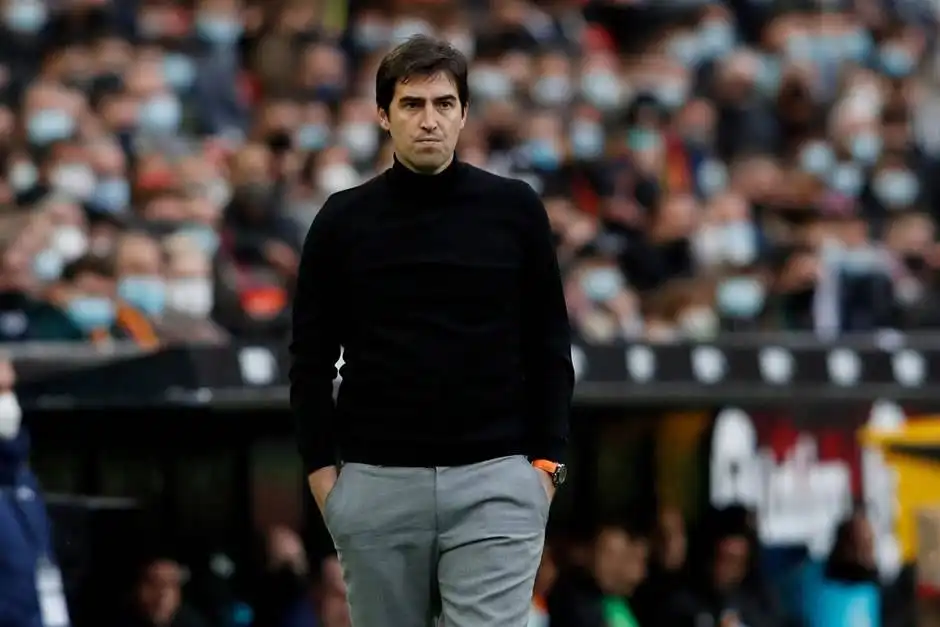
Andoni Iraola earned the Liverpool job the hard way. He took Bournemouth from relegation candidates to European qualification across three seasons, with the smallest stadium in the division and a squad stripped for parts every summer.
His football is unmistakable. Liverpool press in a 4-4-2 diamond, inviting opponents to play short before swarming them centrally, and the trigger comes far higher up the pitch than it did under the previous regime. "Faster, faster" is his most repeated instruction in training. The ball moves forward earlier, turnovers are attacked rather than managed, and the side is built to win the game in the 10 seconds after it regains possession.
That is a change of identity rather than a change of personnel, which is the real task facing him. He inherited a squad assembled for a slower, more controlled approach, and is asking those players to run a different race. Florian Wirtz and Alexander Isak give him the technical ceiling. Whether the rest can sustain that intensity across a full season is the open question.
Replacing Guardiola after a decade is the hardest brief in English football, and City handed it to a coach who already knew the building. Enzo Maresca coached City's youth side, then worked as Guardiola's assistant in the treble season of 2018-19, before promotion with Leicester and two seasons at Chelsea.
His version comes from the same school without being a copy. City build with the goalkeeper joining a back line that splits wide and a double pivot sitting deep, which produces the familiar 3-2-5 shape in possession. What has changed is the defensive work. Maresca's City jump early into an aggressive man-oriented press to stop opponents playing out, whereas late-era Guardiola sides were more content to hold the ball and wait.
Recruitment followed that plan. Elliot Anderson, Enzo Fernandez, Ayyoub Bouaddi and Iliman Ndiaye arrived to give the midfield more legs and more pressing capacity, alongside Geronimo Rulli, a goalkeeper comfortable with the ball at his feet.
City's opening weeks have been smoother. They won on the opening day, won comfortably at Crystal Palace, and took three points at Old Trafford despite going down to 10 men. The pattern has been control without the old passivity.
Liverpool's start has been noisier. The tempo is visibly up, and the shape is clear, but a squad learning a new game will drop points it should not. Anyone who follows football betting markets will know how misleading an early table can be, and how often a side carrying a new system is priced on results rather than performance.
The tactical collision is unusually clean. Maresca wants long spells of settled possession and a patient search for the moment to accelerate. Iraola wants the match played in short bursts, with the ball won high and used immediately.
So the contest sits in one specific place: the first two passes out of the City goalkeeper. If Liverpool's diamond can force City backwards and cut the passing lane into the double pivot, they will create chances without having to build at all. If City break that first line cleanly, they will find acres behind a Liverpool defence committed to a high line, and the game stretches in their favour.
Expect something more open than the chess matches of the Klopp and Guardiola years. Both coaches press, both want the ball, and neither has a track record of sitting back to protect a point. Whichever way it falls, the rivalry has a new shape, and that alone makes it worth watching.