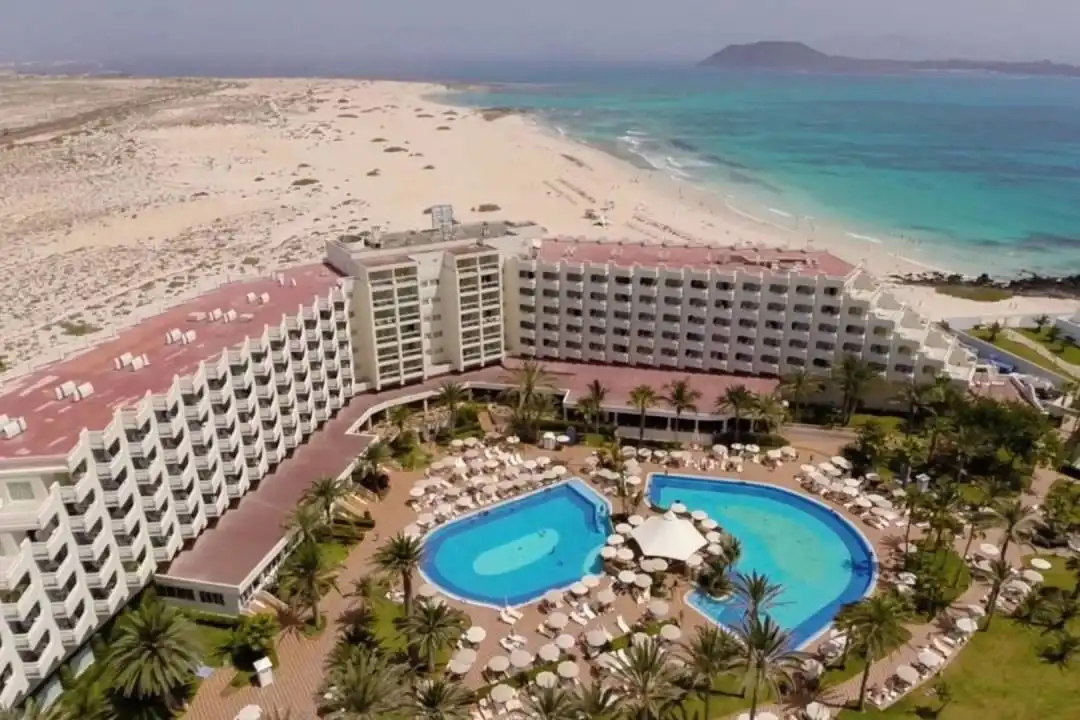
Hotel chain RIU has unveiled plans to modernise one of its controversial hotels located inside the protected Dunas de Corralejo natural park in Fuerteventura, reigniting a long-running environmental dispute over tourism development on the island’s famous dunes.
The company has submitted a proposal to renovate the Hotel Riu Palace Tres Islas, claiming the building is suffering structural deterioration due to years of exposure to salty sea air and ageing infrastructure.
According to project documents submitted to the island cabildo’s environmental department, the refurbishment would include six new hotel rooms, a new solarium, upgraded swimming pools, a fitness area, improved accessibility facilities and energy-saving systems designed to turn the complex into what RIU describes as a “benchmark for sustainability”.
However, environmental groups strongly oppose the project, arguing that any further development is incompatible with the protection of the surrounding natural environment and coastal public land.
The hotel sits within several protected environmental zones linked to the European Natura 2000 network, including marine and bird conservation areas around Corralejo and Isla de Lobos.
Wildlife found in the area includes several protected seabird species, while nearby underwater seagrass meadows are considered ecologically important for Canary Islands marine ecosystems.
RIU insists the works would only affect the existing structure and would not involve expansion into surrounding natural areas or the marine environment. The company says any environmental impact would be temporary, reversible and limited mainly to the construction phase.
The project also proposes replacing lifts, renovating reception areas, upgrading kitchens and spa facilities, and improving water and energy efficiency throughout the hotel.
RIU says the refurbishment is essential not only for safety reasons but also to modernise what it describes as an outdated and energy-inefficient building. The company’s preferred option would involve temporarily closing the hotel during the works to allow a full renovation programme.
But environmental organisations including Ben Magec-Ecologistas en Acción and Turcón have formally objected to the plans.
The groups argue the hotels should eventually be removed altogether from the protected dunes area, claiming they represent “a bad example” of unsustainable tourism development in the Canary Islands.
They are also calling for the continuation of legal proceedings linked to the hotel’s coastal concession after previous disputes over unauthorised works carried out on the property.
The controversy surrounding the RIU hotels in Corralejo has continued for years. Both the Tres Islas and the nearby Hotel Oliva Beach have previously received “black flags” from environmental campaigners over their location on protected coastal land.
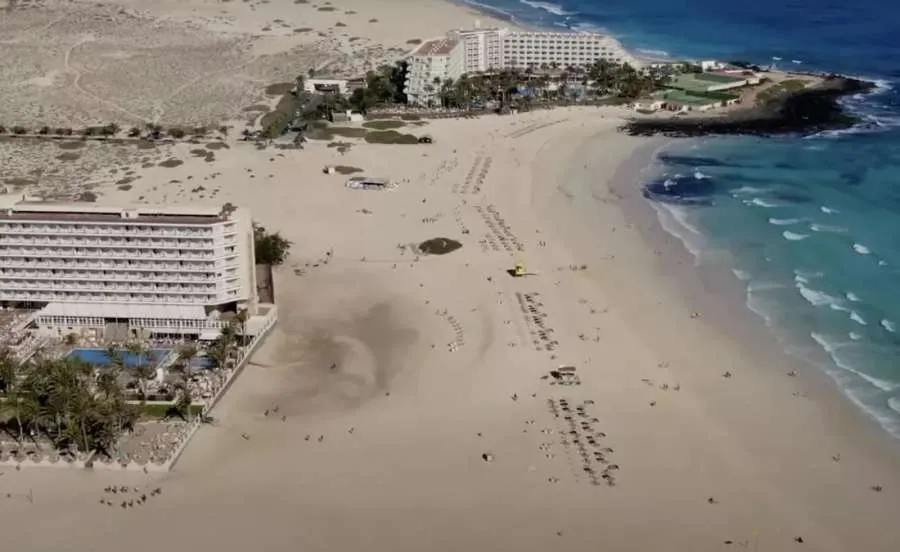
Image of the RIU hotels located in the Corralejo Dunes, Fuerteventura. (Source: Ben Magec-Ecologistas en Acción)
Spanish coastal authorities first opened proceedings over the Tres Islas hotel after works were found to have breached conditions attached to its coastal concession, which originally allowed the hotel to remain in place until 2037 on the condition that its size and height were not increased.
Although illegal rooftop suites were later demolished, environmental groups dismissed the move as little more than a cosmetic fix.
The debate now centres on whether modernisation works can legally continue while the hotel remains inside one of the Canary Islands’ most environmentally sensitive coastal areas.