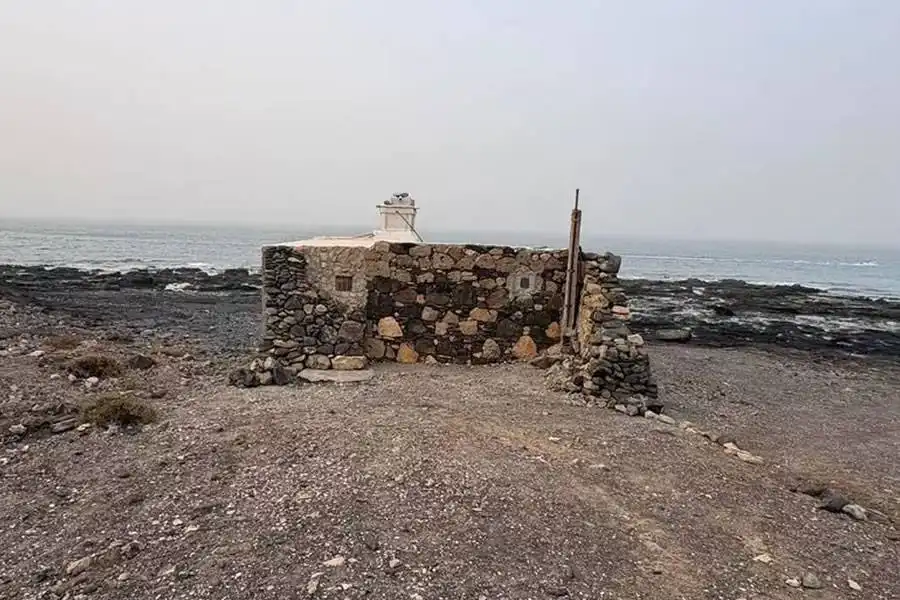
A last-minute battle is continuing to prevent action against a historic coastal property in Cueva de la Negra, Fuerteventura, ahead of a demolition date set for tomorrow, Monday 21st September 2026.
Spain's Coastal Authority notified the family who own the property in the municipality of Pájara of the new date after an earlier attempt to demolish it on 26th August did not go ahead.
The case has since become more complicated, with legal proceedings, heritage concerns and interventions from different public authorities all converging ahead of Monday's deadline.
The property belongs to Pascuala Roger Pérez, whose family is challenging the action. The Administrative Court Number 6 in Las Palmas de Gran Canaria has now admitted an appeal against the court order authorising entry into the property.
The family has asked for the planned intervention to be stopped while the legal proceedings continue.
At the same time, concerns have been raised over the cultural and archaeological importance of the area.
The Canary Islands Government's cultural heritage department has warned the Coastal Authority that work affecting the ground around the property could have implications for a nearby archaeological site.
An indigenous shell midden is recorded close to the house. Such sites, created through accumulated shells and other remains, can provide archaeologists with evidence about the diet and way of life of the Canary Islands' pre-Hispanic population.

The homeowner, Pascuala Roger Pérez, aged 80, and her brother, Lorenzo Roger Pérez, aged 90. (Image provided by the homeowner's family)
The Fuerteventura Cabildo had already adopted precautionary measures relating to the property while its potential cultural value is assessed.
Pájara Council has also called for no demolition to take place while that heritage assessment remains outstanding.
The house lies within the maritime-terrestrial public domain established for the area in 2005, where residential use is restricted under coastal legislation.
The Coastal Authority has a judicial authorisation covering entry, demolition and restoration of the land, while the family and supporting authorities are pursuing measures intended to prevent or delay the action.
That leaves the property at the centre of overlapping coastal, judicial and cultural-heritage proceedings.
The immediate question is now whether the planned action will actually proceed on Monday or whether the latest legal and administrative interventions will stop it again.
With the situation capable of changing quickly, any last-minute court ruling or decision by the Coastal Authority could alter the position before work begins.